

Top Low Carb Bread Manufacturing - 2024
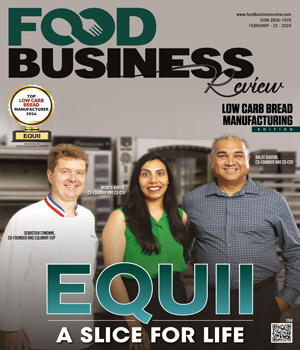
Bakery - 2024
Nominate a Company
Usually, the qualified subscribers of our magazine nominate companies with whom they have collaborated and experienced exceptional results to be in this list. Did a company you recently worked with give you stellar results and ROI? Did it turn out to be one you would wholeheartedly recommend to peers? Or do you know of such an outstanding company through your network? Please fill in the details below and nominate them to be featured here.

Top Low Carb Bread Manufacturing - 2024

Agile Digital Marketing leverages the advantage of inbound marketing strategies to build compelling brand recognition for food and beverage companies.It serves food companies and their supply chain, from manufacturers to distribution and brokerage channels, down to the retail consumer packaged goods (CPG) level. ... read full profile
EQUII, a beacon of food innovation, is a provider of signature premium protein-rich bread and versatile baking blends. The food tech company offers soft, flavorful multi-grain and classic wheat bread with remarkable taste, texture and nutrition. ... read full profile
NNZ stands out in the competitive packaging industry as a trusted partner for developing sustainable solutions designed for clients’ unique needs that seamlessly fit into their packaging strategies. From the products that safeguard and preserve content to the efforts to reduce food waste, the company takes great pride in its contribution toward a greener future. ... read full profile
Bakery Info
Q1
What Do Top Bakery Services Vendors Provide Across the Food Industry?
Top Bakery Services Vendors support commercial bakeries, food manufacturers and retail chains with production, formulation and supply chain capabilities tied to baked goods. Their scope ranges from ingredient sourcing and dough preparation to contract baking, packaging and distribution. Some vendors focus on private-label manufacturing, while others specialize in niche segments such as gluten-free or artisanal products. The category sits between food production and service outsourcing, where consistency, shelf life control and batch scalability are central concerns for buyers managing large or distributed product lines.
Q2
Why Are Top Bakery Services Vendors Gaining Relevance Now?
Demand patterns have shifted toward convenience foods, ready-to-eat snacks and differentiated bakery items, which has increased reliance on Top Bakery Services Vendors. Retailers and food brands are under pressure to expand product variety without building new production capacity. At the same time, ingredient volatility, labor shortages and compliance requirements make in-house baking less predictable. Vendors absorb part of that complexity by standardizing production and maintaining certified facilities. Growth is less about volume alone and more about flexibility—shorter product cycles, seasonal launches and rapid reformulation tied to dietary trends.
Q3
How Should Businesses Evaluate Bakery Service Vendors?
Evaluation tends to break down into four areas: production capability, formulation expertise, compliance and supply reliability. Production capability includes batch size flexibility, automation levels and turnaround time. Formulation matters when products require clean-label ingredients, allergen control or shelf-life extension without preservatives. Compliance is not optional—buyers expect documented adherence to food safety standards such as HACCP and traceability protocols. Supply reliability often becomes the deciding factor, especially when vendors handle multi-location distribution or private-label contracts tied to strict delivery windows.
Q4
What Value Do Bakery Service Vendors Deliver to Food Brands and Retailers?
Working with bakery service providers changes how food businesses manage cost and risk. Instead of investing in ovens, skilled labor and facility maintenance, companies shift to a variable-cost model tied to production volume. This reduces exposure to underutilized capacity. Vendors also shorten product development timelines by offering pre-tested formulations and pilot runs. In retail contexts, this translates into faster shelf rotation and more frequent product refreshes. The value is less about outsourcing alone and more about maintaining product consistency across locations without duplicating infrastructure.
Q5
How Are Technology and Process Innovation Shaping This Category?
Automation is gradually replacing manual intervention in mixing, proofing and baking stages, which improves batch consistency and reduces waste. Data tracking across production lines allows vendors to monitor temperature variation, ingredient usage and defect rates in real time. Digital inventory systems help align ingredient procurement with production schedules, limiting spoilage. In parallel, formulation tools are being used to adjust recipes for dietary requirements such as reduced sugar or plant-based alternatives. These changes are incremental but cumulative, affecting yield, compliance reporting and turnaround time.
Q6
What Should Buyers Prioritize When Comparing Top Bakery Services Vendors?
When comparing Top Bakery Services Vendors, buyers tend to focus on fit rather than scale. A large vendor may not handle small-batch specialty products efficiently, while a niche provider may struggle with national distribution. Key priorities include alignment with product type, proven food safety records and the ability to meet fluctuating demand without delays. Contract terms also require scrutiny—minimum order volumes, lead times and reformulation costs can affect long-term viability. In listings such as those from Food Business Review, the emphasis is often on vendors that balance production discipline with adaptability.
